

E-Commerce Warehousing vs. Traditional Warehousing: Key Differences
Introduction to E-Commerce and Traditional Warehousing
The rise of e-commerce has transformed the way businesses operate, fundamentally altering supply chains and logistics. As online shopping becomes increasingly popular, the need for efficient warehousing solutions grows more critical than ever. But not all warehouses are created equal. Traditional warehousing systems often serve different needs compared to modern fulfillment centers tailored for e-commerce.
So what’s the difference between these two approaches? How do they impact your business strategy? Whether you’re a budding entrepreneur or an established company looking to optimize operations, understanding the nuances of e-commerce warehousing versus traditional methods can make all the difference in your supply chain management. Let’s dive into this essential topic and uncover how each method plays a unique role in today’s fast-paced market landscape.
The Role of Warehousing in Supply Chain Management
Warehousing plays a critical role in supply chain management. It acts as a bridge between manufacturers and consumers, ensuring smooth product flow. Efficient storage solutions are essential for handling inventory effectively.
A well-organized warehouse optimizes space and minimizes costs. With advanced technology like warehouse management systems, businesses can track stock levels in real-time. This leads to better decision-making regarding replenishment and order fulfillment.
Moreover, warehousing allows companies to respond quickly to market demands. By strategically placing distribution centers closer to customers, businesses can reduce delivery times significantly.
Additionally, the rise of e-commerce has shifted focus toward agile warehousing practices. Fulfillment centers now prioritize speed and accuracy over sheer volume alone, adapting swiftly to consumer expectations.
This evolution illustrates how integral warehousing is within the broader context of logistics strategy and operational efficiency.
Key Differences between E-Commerce and Traditional Warehousing
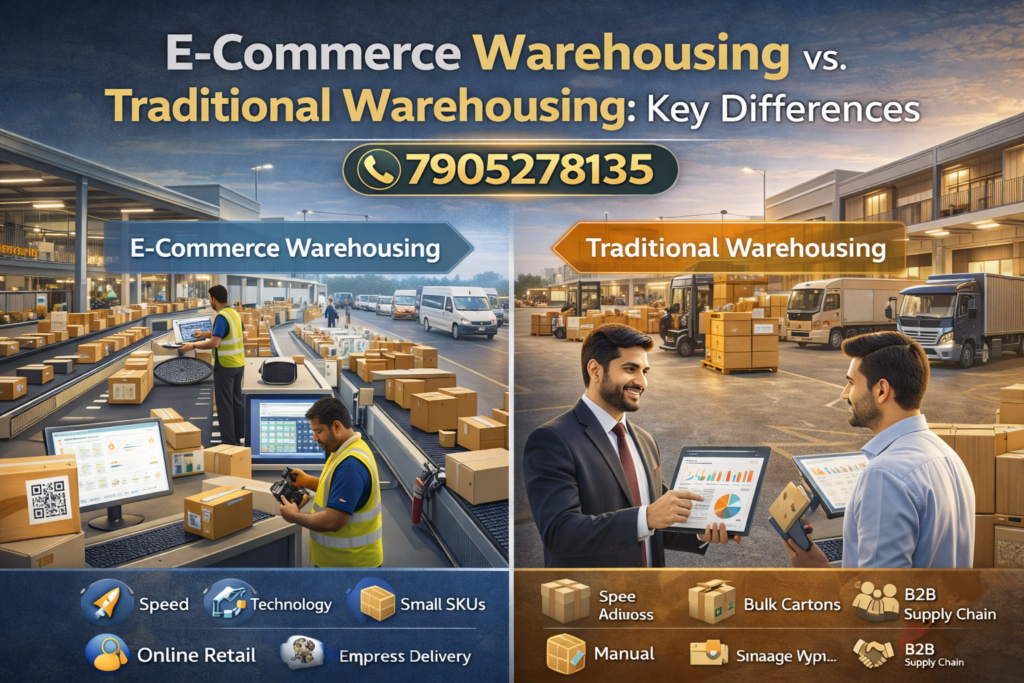
E-commerce warehousing and traditional warehousing serve distinct purposes in the supply chain. E-commerce facilities focus on speed and efficiency, handling smaller quantities of diverse items. They cater to individual customers through direct-to-consumer shipping.
Conversely, traditional warehouses typically stock larger volumes for bulk distribution. These structures support B2B operations, where businesses order large shipments rather than individual products.
Technology plays a crucial role in e-commerce settings. Advanced warehouse management systems streamline operations by automating inventory tracking and order fulfillment processes.
On the other hand, traditional warehouses may rely more on manual methods or basic software solutions. This difference can impact operational efficiency significantly.
Moreover, e-commerce centers often require flexible layouts to accommodate changing product lines and seasonal demands, while traditional offerings maintain consistent configurations for predictable inventory flows.
Cost Comparison
When comparing costs between e-commerce and traditional warehousing, several factors come into play. E-commerce fulfillment centers often require advanced technology for efficient operations. This includes a robust warehouse management system to track inventory in real-time.
Traditional warehouses generally have lower upfront costs but may struggle with scalability. They often rely on manual processes, which can lead to higher labor expenses over time.
E-commerce setups frequently involve storage fees based on space utilization and order volume. In contrast, businesses using traditional warehousing might benefit from fixed rates that don’t fluctuate as much with demand shifts.
Third-party logistics (3PL) providers offer flexible pricing models tailored to specific needs. However, these can add up quickly if not managed properly.
Understanding B2B vs B2C warehousing is crucial for cost analysis too. Each model has its unique demands, influencing overall expenditures differently depending on the target market and service level requirements.
Advantages and Disadvantages of Each Approach
E-commerce warehousing offers flexibility and speed. With a focus on rapid order fulfillment, businesses can meet customer demands efficiently. Advanced warehouse management systems enable real-time tracking and inventory control, enhancing operational efficiency.
However, the challenge lies in scalability. Rapid growth can strain resources and require significant investment in technology or infrastructure.
On the other hand, traditional warehousing provides stability. Established processes often mean lower initial costs for businesses with steady inventory flows. This model excels in B2B scenarios where large quantities are shipped less frequently.
Yet, it may struggle to adapt quickly to market changes or consumer needs compared to its e-commerce counterpart.
Automation plays a vital role across both models but is more prevalent in modern e-commerce settings as companies seek competitive advantages through third-party logistics (3PL). Each approach presents unique hurdles and benefits that depend heavily on business goals and market conditions.
Future of Warehousing for E-Commerce Businesses
The future of warehousing for e-commerce businesses is rapidly evolving. With technology at the forefront, automation will play a pivotal role in enhancing efficiency. Advanced warehouse management systems will streamline operations, reducing human error and increasing speed.
Robotics are becoming commonplace, handling everything from picking to packing. This shift allows warehouses to operate 24/7, catering to the growing demand for quick deliveries.
Another trend is the rise of fulfillment centers. These strategically located hubs ensure faster shipping times by minimizing distance to customers. Enhanced data analytics will further optimize inventory management and forecasting.
Sustainability is also gaining traction in warehouse design and operations. Eco-friendly practices not only attract consumers but can drive down costs as well.
As third-party logistics (3PL) providers expand services, smaller e-commerce businesses gain access to advanced solutions once reserved for larger enterprises. The landscape promises exciting changes ahead as flexibility becomes key in meeting customer expectations.
Conclusion
The landscape of warehousing is continually evolving, particularly in the context of e-commerce. As online shopping surges, businesses are adapting their strategies to meet customer demands effectively. The differences between traditional and e-commerce warehousing highlight the dynamic nature of supply chain management.
E-commerce fulfillment centers prioritize speed, flexibility, and technology integration. They utilize advanced warehouse management systems for efficiency and accuracy while managing inventory levels meticulously. This contrasts with traditional warehousing methods that might focus on bulk storage and larger shipments typically associated with B2B logistics.
Cost considerations also play a significant role in choosing between these two approaches. While initial costs may be higher for automated e-commerce solutions, they can lead to long-term savings through efficient operations and improved order fulfillment rates.
Both models come with their advantages and disadvantages. E-commerce warehouses offer agility but require constant adaptation to fast-changing consumer preferences. Traditional warehousing provides stability but may struggle against the rapid pace set by online retailers.