

Is Renting a Warehouse Better Than Buying in 2026?
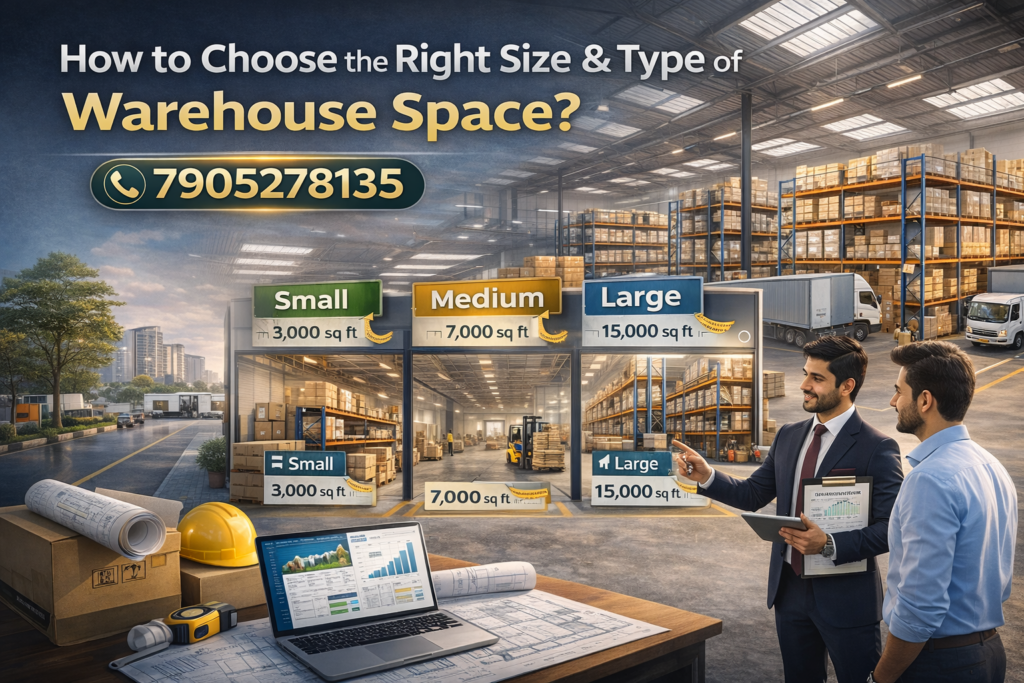
Choosing the right warehouse space is one of the most important decisions for any business involved in storage, distribution, manufacturing, or e-commerce. A warehouse is not just a place to store goods—it is a critical part of your supply chain that directly affects efficiency, delivery timelines, operational costs, and customer satisfaction.
In 2026, with businesses expanding rapidly and logistics becoming more complex, selecting the right size and type of warehouse space requires careful planning. Here’s a complete guide to help you make the right decision.
1. Understand Your Business Requirements First
Before searching for warehouse space, clearly define your operational needs. Ask yourself:
- What type of goods will you store?
- How much inventory do you manage monthly?
- Is your demand seasonal or consistent?
- Do you need space for packaging, sorting, or distribution?
- Will you require office space within the warehouse?
For example, an e-commerce business may require space for sorting and packaging, while a manufacturing unit might need heavy-duty flooring and loading docks.
Understanding your workflow helps determine whether you need a compact storage unit, a mid-sized warehouse, or a large industrial facility.
2. Calculate the Right Warehouse Size
Selecting the right size is crucial. Renting too small a warehouse may create storage issues, while renting too large a facility increases unnecessary costs.
Key Factors to Consider:
Inventory Volume
Estimate the average and peak inventory levels. Always plan for growth and seasonal stock increases.
Vertical Storage
Modern warehouses allow vertical storage with racks and shelves. High ceilings can reduce the need for larger floor areas.
Movement Space
Ensure sufficient space for forklifts, workers, and loading/unloading activities.
Future Expansion
Choose a size that allows room for scaling your operations without frequent relocation.
A practical approach is to calculate current storage needs and add 20–30% extra space for future growth.
3. Choose the Right Type of Warehouse
Not all warehouses are the same. The type you choose should align with your business model.
1. Private Warehouse
Owned or leased long-term by a single company. Suitable for large enterprises with stable operations.
2. Public Warehouse
Shared facilities that offer flexible rental options. Ideal for small and medium businesses.
3. Distribution Center
Designed for quick movement of goods rather than long-term storage. Best for e-commerce and FMCG businesses.
4. Cold Storage Warehouse
Required for perishable goods such as food, pharmaceuticals, or chemicals.
5. Industrial Warehouse
Heavy-duty infrastructure for manufacturing or bulk storage.
Selecting the right type ensures operational efficiency and prevents unnecessary infrastructure investment.
4. Consider Location & Accessibility
Location plays a vital role in warehouse performance. A well-located warehouse reduces transportation costs and delivery time.
Look for areas that offer:
- Easy highway connectivity
- Smooth truck movement
- Proximity to suppliers or markets
- Adequate parking space
- Good road infrastructure
If your business relies on quick deliveries, being closer to urban centers can improve customer satisfaction. For manufacturing units, industrial zones may be more suitable.
5. Evaluate Infrastructure & Facilities
A warehouse should support your operations efficiently. Check for:
- Proper ventilation and lighting
- Adequate ceiling height
- Strong flooring for heavy loads
- Loading docks and ramps
- Security systems (CCTV, guards)
- Fire safety compliance
- 24/7 electricity and water supply
If your goods require special handling, ensure temperature control or humidity management systems are available.
Modern warehouses often offer value-added services such as inventory tracking systems and logistics support, which can streamline operations.
6. Understand Cost & Lease Terms
Budget is a major factor when selecting warehouse space. Analyze:
- Rent per square foot
- Security deposit
- Maintenance charges
- Electricity and utility costs
- Escalation clauses in lease agreements
Short-term leases provide flexibility but may cost more per square foot. Long-term leases often offer better rates but require commitment.
Always compare pricing with the facilities provided to ensure you get value for your investment.
7. Plan for Technology & Automation
In 2026, warehouse operations are increasingly technology-driven. Businesses are adopting:
- Barcode and RFID tracking
- Automated storage systems
- Warehouse management software (WMS)
- Smart security systems
Ensure the warehouse has the infrastructure to support modern systems. This improves inventory accuracy and reduces manual errors.
8. Safety & Compliance Matters
Warehouse safety should never be compromised. Check whether the property meets:
- Fire safety standards
- Emergency exit norms
- Structural safety requirements
- Government regulations
Compliance not only protects employees and goods but also prevents legal complications.
9. Think Long-Term
Your warehouse should support business growth, not limit it. Consider long-term operational goals and choose a space that adapts to expansion.
Relocating warehouses frequently can disrupt supply chains and increase costs. Investing time in selecting the right size and type initially saves significant resources later.
Final Thoughts
Choosing the right size and type of warehouse space is a strategic decision that affects your business efficiency, profitability, and scalability. Start by understanding your operational needs, calculate appropriate space requirements, evaluate location and infrastructure, and compare lease terms carefully.
A well-planned warehouse setup not only stores goods—it strengthens your entire supply chain. Take the time to analyze your needs thoroughly, and select a warehouse that supports both your present operations and future growth ambitions.